
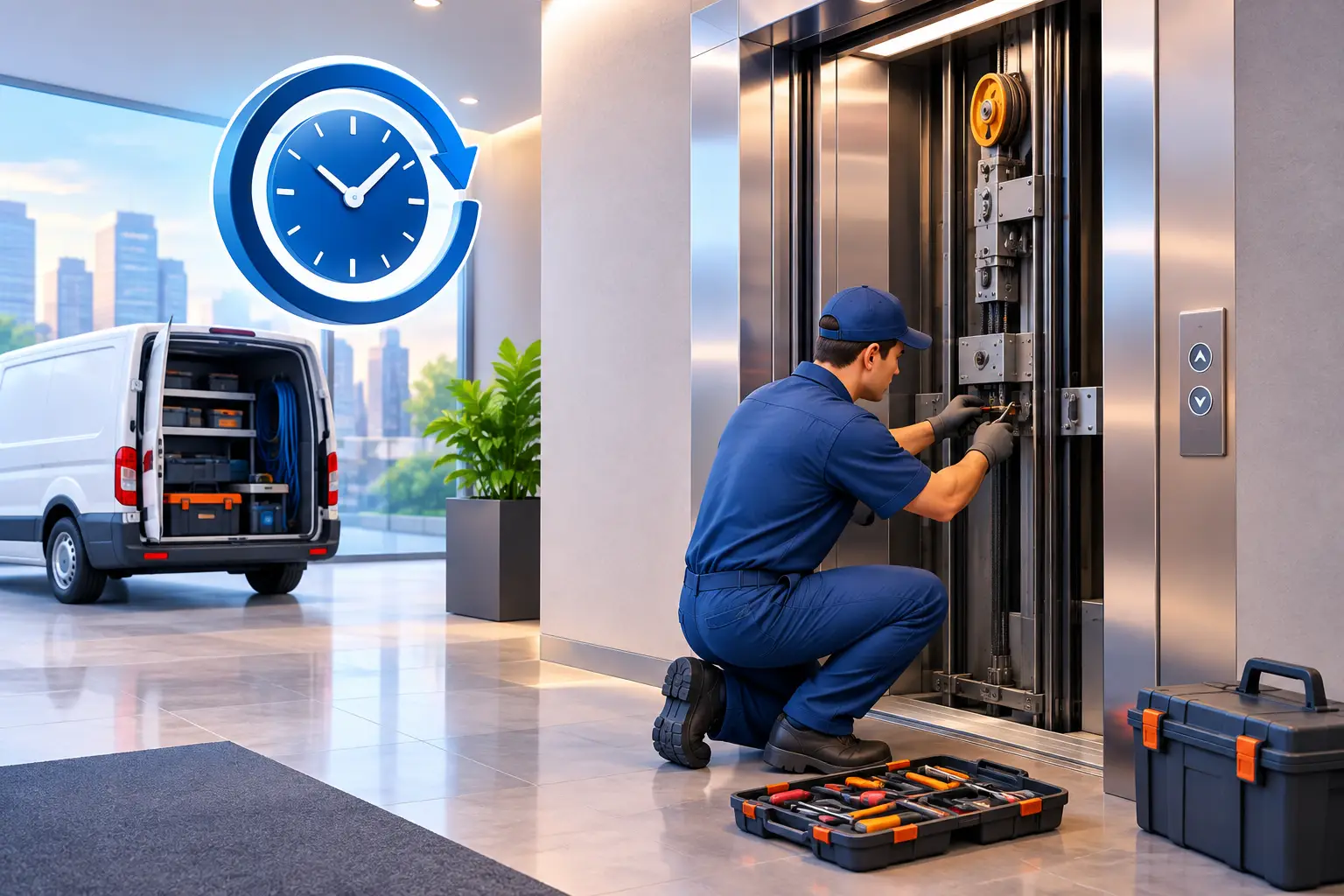
A lift failure rarely happens at a convenient time. It may occur during hotel check-in, at the start of a busy office day, while shoppers are moving through a mall, or when a resident needs step-free access to their flat. A dependable 24-hour lift repair service gives property teams a clear route from disruption to safe, controlled recovery - whatever the hour.
For building owners and managers, the priority is not simply getting the lift moving again. It is protecting passengers, preventing further equipment damage, communicating clearly with occupants and restoring service through a properly diagnosed repair. That requires skilled technicians, the right parts and a service partner that treats every call-out with the urgency it deserves.
When a lift breakdown is an emergency
Not every fault has the same risk level, but every reported problem should be assessed promptly. A trapped passenger is an immediate emergency. So is a lift that stops between floors, makes unusual noises, has damaged doors, repeatedly trips out, or behaves unpredictably. In these cases, the lift should be taken out of service until a qualified technician has inspected it.
A lift that is operating slowly, displaying an intermittent fault code or experiencing minor door delays may not always require a full emergency response. However, it should not be ignored. Small symptoms can point to worn components, alignment issues, control faults or conditions that may develop into a complete shutdown. Early reporting gives the maintenance team a better chance of resolving the issue before it affects occupants.
The correct response depends on the equipment, the nature of the fault, the building's occupancy and whether people are affected. A residential block with one lift has different operational pressures from a shopping centre with several units, yet both need a safe escalation process and reliable technical support.
What to do while help is on the way
The first minutes after a lift fault matter. If passengers are trapped, building staff should remain calm, reassure them that assistance has been called and keep communication open through the car alarm, intercom or available emergency communication system. Do not attempt to force doors open or remove passengers without trained lift personnel. Unauthorised release attempts can turn an inconvenient incident into a serious injury risk.
If the lift is empty but faulted, prevent further use. Place clear signage at the landing, advise security or reception teams, and direct users to alternative lifts or stairs where appropriate. For people with reduced mobility, the building team should consider safe temporary access arrangements rather than assuming stairs are a suitable substitute.
When calling for assistance, provide the building name and location, lift identification if available, the number of trapped passengers, the fault symptoms, and any information shown on the display. It is also helpful to explain whether the building has experienced a power interruption, flooding, construction activity or recent equipment work. These details support faster diagnosis before the technician arrives.
How 24-hour lift repair service works
A professional 24-hour lift repair service begins with an accurate call assessment. The support team establishes whether passengers are trapped, whether the equipment is safe to remain in operation, and what access arrangements are needed. Emergency technicians are then deployed with the objective of making the situation safe, releasing trapped passengers where required and identifying the cause of the failure.
On site, the technician will inspect the lift car, landing doors, controller, machine room or motor area, safety circuits and related electrical systems. Modern lifts may provide diagnostic information through the controller, but fault codes are only one part of the investigation. A code can indicate where a problem has been detected, not necessarily the underlying reason it occurred.
The technician may be able to reset a protective device, repair a door-lock issue, replace a failed component or correct an adjustment during the first visit. Where a specialist part is required, the lift may need to remain safely isolated while the replacement is sourced. This is not a sign of poor service. Returning a lift to operation without correcting the cause can create repeat failures, damage other components and expose users to unnecessary risk.
For contracted customers, service history is particularly valuable. Records of previous call-outs, recurring errors, replaced parts and maintenance findings help technicians recognise patterns and make better repair decisions. This is one reason planned maintenance and emergency response work best when managed by the same capable provider.
The faults that cause avoidable downtime
Many emergency lift call-outs are linked to components that receive heavy daily use. Landing and car doors are a common source of faults because they rely on precise alignment, rollers, sensors, locks and operating mechanisms. Dirt, worn parts, impact damage and poor adjustment can all interrupt normal operation.
Control systems may also be affected by electrical supply issues, overheating, ageing relays, loose connections or failing electronic components. In Botswana's operating environment, dust, heat and unstable power conditions can place additional pressure on equipment if systems are not inspected and maintained correctly.
Other common causes include worn suspension and drive components, degraded batteries in emergency systems, damaged travelling cables, water ingress and building works that interfere with lift equipment. A 24-hour response can restore safety after these faults, but preventative inspections are the stronger long-term defence against disruption.
Why fast repair must still be a safe repair
Speed matters when tenants, guests, staff and visitors are inconvenienced. Yet a rapid response should never mean bypassing safety checks. Before a lift returns to service, the technician must confirm that the fault has been addressed and that the relevant safety functions, doors and travel operation are working correctly.
Property stakeholders should be cautious of quick fixes that only clear a fault temporarily. A lift that repeatedly stops, has recurring door problems or requires frequent resets is signalling an underlying issue. The lowest immediate repair cost can become the highest long-term cost if it results in repeat call-outs, dissatisfied occupants, damaged reputation or unplanned component replacement.
Quality repair work balances urgency with evidence. It involves clear fault reporting, suitable replacement parts, correct adjustment and testing, and practical advice on any follow-up action. Where equipment is ageing or parts are becoming difficult to obtain, a repair provider should explain the options honestly. Depending on the condition of the lift, targeted modernisation may offer better value than repeatedly repairing obsolete systems.
Preparing your building for an after-hours lift fault
Good emergency response is easier when the building is prepared before a breakdown occurs. Keep the lift service provider's emergency number available to security, reception, facilities and duty managers. Make sure authorised personnel can provide access to machine rooms, control cabinets and relevant electrical areas at any time.
Your team should also know which lifts serve critical access routes, where alternative access is available and how to communicate a shutdown to occupants. Hotels may need a guest-assistance process. Malls may need crowd-management support. Residential developments should consider residents who rely on the lift for mobility or medical reasons.
A useful preparation plan covers four practical areas:
- Current lift identification details and the correct site address for emergency call-outs.
- Clear access to equipment rooms, including keys, security procedures and after-hours contacts.
- A staff process for trapped-passenger communication and keeping failed equipment out of use.
- A planned maintenance programme that records faults, repairs, inspections and recommended replacements.
These measures do not prevent every breakdown, but they reduce confusion when time matters most.
From emergency repair to dependable performance
An after-hours call-out should also prompt a wider question: was this an isolated failure, or a warning that the lift needs closer attention? Reviewing the repair report with your service provider can reveal whether adjustments, replacement parts, battery changes, door work or control-system upgrades should be planned.
Brand Matrix supports property stakeholders with emergency repair, preventative maintenance, modernisation and spare-parts supply, helping buildings manage both the immediate fault and the conditions behind it. Every job matters, big or small, because lift reliability affects more than equipment - it affects the people who depend on the building every day.
When a lift stops, the right response is calm, safe and technically informed. A trusted 24-hour repair partner gives your team the confidence to act quickly, protect occupants and keep downtime from becoming a larger operational problem.