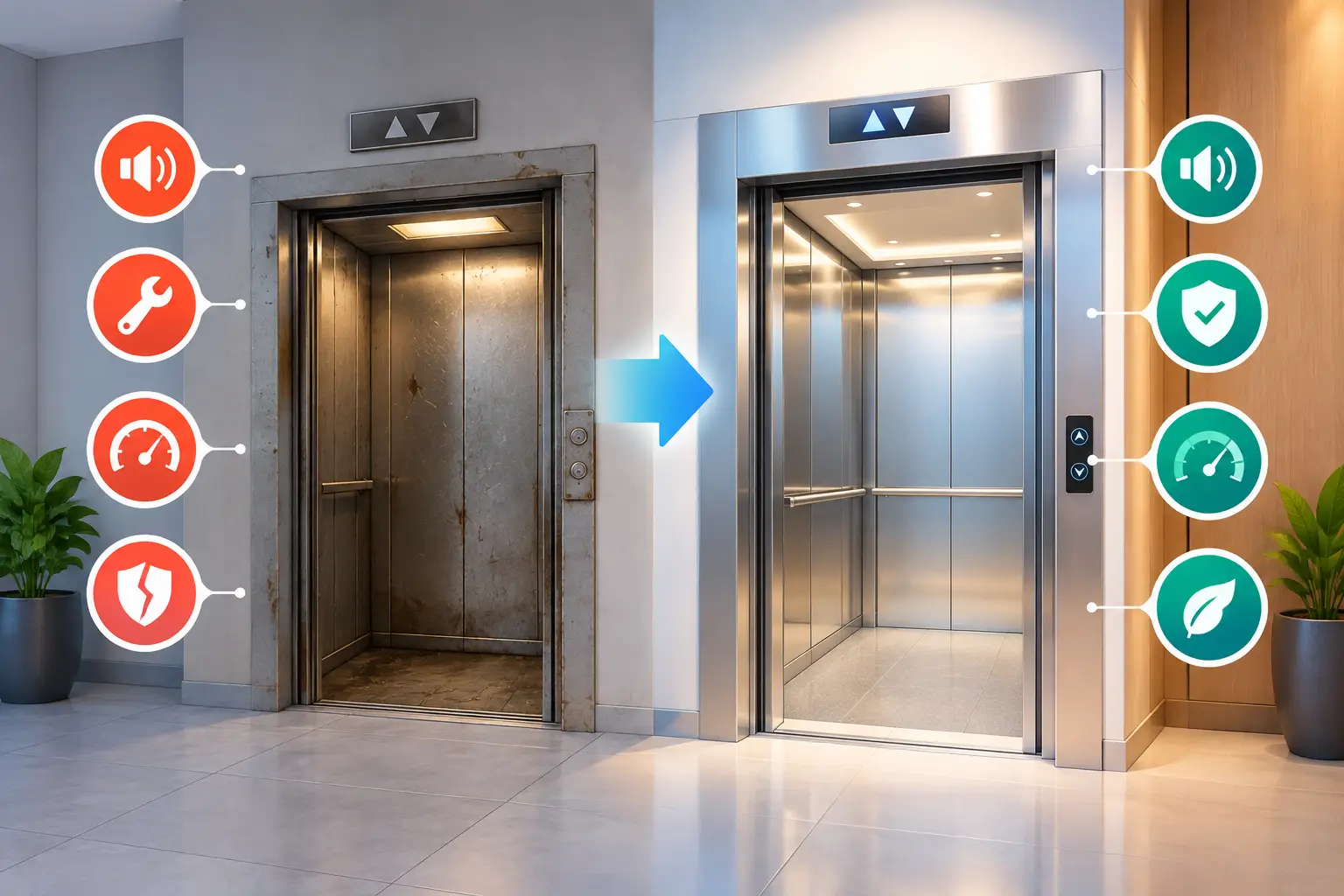
A lift that stops between floors during the morning rush is not merely an inconvenience. It affects tenant confidence, visitor access, staff productivity and, most importantly, safety. Recognising the signs your lift needs modernisation allows building decision-makers to act before small performance issues become costly breakdowns or prolonged disruptions.
Modernisation is not always a full replacement. In many cases, the lift car, shaft and main mechanical components can remain in service while ageing controls, door equipment, safety devices or finishes are upgraded. The right scope depends on the equipment’s condition, its duty cycle, the availability of parts and the needs of the people who use the building.
9 signs your elevator needs modernisation
1. Breakdowns are becoming frequent
An occasional fault can occur even in a well-maintained lift. Repeated call-outs, however, are a clear warning that individual repairs may no longer address the underlying problem. If the same faults return, passengers are regularly trapped or the lift spends increasing time out of service, the system may be reaching the practical limit of piecemeal repairs.
A modernisation assessment identifies whether the problem sits with the controller, door operator, wiring, drive system or another component. Replacing the failing system as a planned project can reduce unplanned downtime and make maintenance more predictable. For a hotel, office block or busy retail site, that reliability has a direct effect on customer and tenant experience.
2. Replacement parts are difficult to source
Older lift models can remain operational for many years, but manufacturers eventually discontinue components. When a relay, circuit board or door part is obsolete, repair times can extend while a compatible part is located, refurbished or specially sourced.
This is more than a procurement problem. It creates a business-continuity risk: a minor failure can take a lift out of service for far longer than expected. Modern controls and door systems use current, supported components, making future maintenance and fault diagnosis more practical. It is sensible to plan an upgrade while the lift is still running, rather than waiting for an unavailable part to force an urgent decision.
3. Passengers report rough, slow or inconsistent journeys
Jerking on departure, uneven stopping at landings, unusual vibration, noisy travel and slow door operation should not be dismissed as normal signs of age. They can point to worn components, outdated drive technology, poor levelling performance or door equipment that is no longer operating consistently.
Passengers often notice these issues before building management sees a recorded fault. In residential developments, they can affect residents’ daily confidence. In commercial buildings, hotels and shopping centres, they shape visitors’ first impression of the property. A modern drive and control system can improve ride quality, landing accuracy and door performance, subject to the condition of the wider installation.
4. The doors are causing most of the faults
Lift doors work through thousands of cycles and are among the most common sources of service calls. Doors that reopen repeatedly, close too slowly, strike their guides, fail to detect passengers or remain open at a floor can create access problems and safety concerns.
Regular maintenance can resolve adjustment and wear issues, but ageing door operators, rollers, tracks and safety edges may eventually need more than ongoing repair. Upgrading door equipment can significantly improve availability because it addresses one of the most heavily used parts of the installation. It is particularly valuable in buildings with high traffic at peak times.
5. Levelling at floors is unreliable
A lift should stop accurately level with the landing floor. If passengers have to step over a noticeable gap or rise, the risk of trips increases for everyone, especially older users, people with limited mobility, guests carrying luggage and those using trolleys or wheelchairs.
Poor levelling may result from worn braking components, ageing control equipment, encoder issues or changes in the lift’s mechanical performance. It requires professional investigation rather than informal adjustment. Modernisation may be appropriate where the existing control system cannot reliably support accurate floor levelling or where recurring corrections are no longer cost-effective.
6. The control panel is outdated or difficult to use
A worn car operating panel does not necessarily mean the whole lift needs replacing. Yet faded buttons, unreliable floor selections, poor illumination, damaged indicators and unclear emergency communication are all signs that the passenger interface needs attention.
Interior enhancement can improve the appearance and usability of a lift car, while a wider modernisation can introduce clearer displays, reliable push buttons, improved lighting and better emergency communication. For landlords and hospitality operators, this is a practical way to align the lift experience with improvements made elsewhere in the building. The priority should remain safety and functionality, not appearance alone.
7. Energy use and operating costs are rising
Older traction systems and poorly managed car lighting can consume more energy than necessary. This does not mean every old lift automatically justifies replacement on energy grounds, as usage levels and current equipment condition matter. However, if high energy use sits alongside reliability issues and growing repair costs, the financial case for modernisation becomes stronger.
Modern drive technology, efficient lighting and improved control strategies can lower running costs while improving performance. A proper assessment should compare the proposed investment with likely savings, expected service life and the cost of continued repairs. The cheapest immediate option is not always the most economical over the next five to ten years.
8. The building’s needs have changed
A lift installed for a low-occupancy office may struggle when the building becomes a busy medical practice, hotel, mixed-use development or multi-tenant commercial site. Higher traffic, longer operating hours and heavier loads place different demands on door cycles, dispatching and component durability.
Modernisation can adapt an existing installation to its present role. This may involve improving door speed, upgrading controls, enhancing car interiors, adding access-control integration or reviewing the lift’s capacity and performance. Where traffic demand has changed significantly, a technical survey is essential. Some limitations are determined by the original shaft size and structural arrangement, so not every desired upgrade will be feasible without wider building work.
9. Safety features no longer meet the required standard
Safety is the strongest reason to review ageing lift equipment. Older installations may lack current protective features, reliable two-way emergency communication, effective door protection or monitoring capabilities expected in a professionally managed building.
Compliance requirements vary according to the installation, location and applicable standards, so modernisation should be based on a detailed inspection rather than assumptions. A competent lift specialist can identify safety-related gaps, explain the practical risk and recommend a phased or full upgrade plan. This gives building owners a clear basis for budgeting and prioritising work.
How to plan lift modernisation without unnecessary disruption
The first step is a condition survey that looks beyond the most recent breakdown. Review service records, fault patterns, component age, parts availability, passenger feedback and the impact of downtime on the building. A lift that operates reliably but has dated finishes may need a different solution from one with an obsolete controller and recurring door failures.
Ask for a scope that distinguishes urgent safety work from reliability improvements and cosmetic upgrades. This helps protect the maintenance budget while making sure critical risks are not delayed. In some buildings, a phased approach is sensible: modernise the controller and door system first, then complete interior enhancements at a later stage. In a single-lift building, careful scheduling is especially important because the lift may need to be unavailable during parts of the work.
Communication also matters. Occupants should know when work will take place, how long it is expected to last and what access arrangements apply during the project. For buildings serving the public, consider deliveries, mobility needs, peak visitor periods and emergency access before agreeing the programme.
A quality modernisation should leave the building with more than newer-looking equipment. It should provide dependable operation, clearer fault support, maintainable components and a safer experience for every passenger. Brand Matrix approaches each assessment with that full lifecycle view, from diagnostics and planning through to installation, testing and ongoing preventative maintenance.
When your lift begins asking for attention more often than it should, treat that pattern as useful information. A timely technical assessment gives you choices, protects occupants and helps you invest before a breakdown dictates the terms.