
A lift fault rarely arrives at a convenient time. It may be a guest travelling to a hotel room, a tenant heading to a meeting, or a visitor with limited mobility who suddenly cannot reach another floor. Effective lift safety features are therefore not simply technical additions. They are the systems that protect people, limit disruption and give property teams confidence that a critical part of the building is being managed properly.
For building owners and facility managers, the priority is not to memorise every component in the lift shaft. It is to understand what the main safety systems do, recognise when they need professional attention and maintain a service arrangement that prevents avoidable failures.
The lift safety features that protect every journey
A modern lift is designed with several layers of protection. These systems work together: one monitors movement, another controls the doors, while others provide protection during a power issue or an emergency. A single feature is never a substitute for thorough maintenance.
Door protection and interlocks
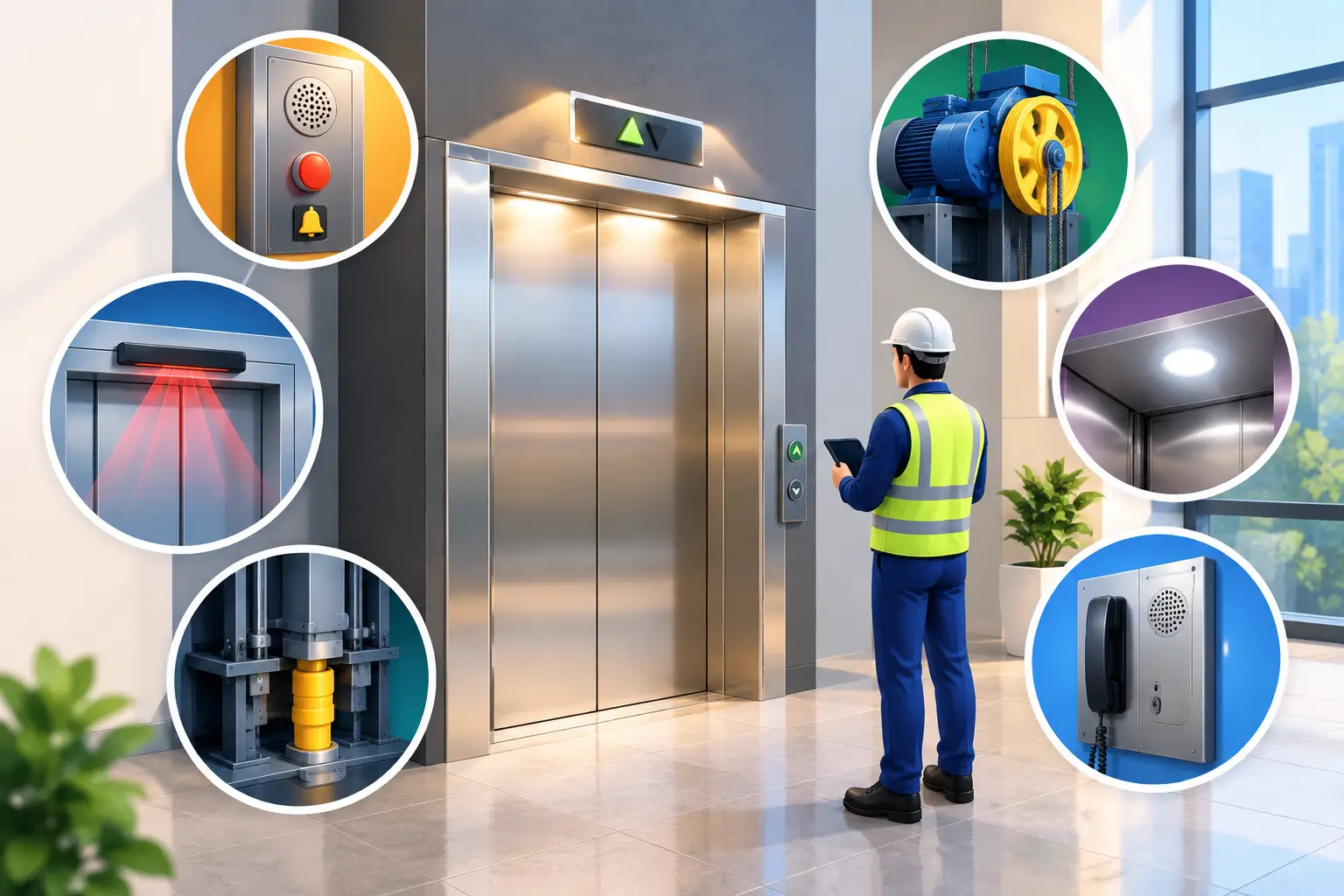
Lift doors are among the most frequently used parts of the installation and deserve close attention. Door sensors detect people or objects in the doorway and should prevent the doors from closing when an obstruction is present. The door operator controls opening and closing speed, while safety edges and light curtains add another layer of detection.
Interlocks are equally important. They prevent a landing door from opening unless the lift car is correctly positioned at that floor. If doors hesitate, repeatedly reopen, scrape, close too forcefully or fail to align, the issue should be reported promptly. It may be a minor adjustment, but continued use can increase wear and create a passenger safety concern.
Overspeed governor, brakes and safety gear
The lift’s braking system is designed to hold the car securely when it stops. If the car travels faster than its permitted speed, an overspeed governor detects the condition and activates the safety gear. This grips the guide rails to bring the car to a controlled stop.
These components are not visible to passengers, which is why they can be overlooked when a lift appears to be operating normally. Their condition depends on correct adjustment, testing and inspection by competent technicians. Oil contamination, worn components or poor calibration can affect performance, making preventative maintenance essential.
Emergency alarm and two-way communication
A trapped passenger needs a reliable way to call for help. The alarm button inside the car should connect to a monitored communication system, such as a GSM unit or dedicated emergency line, rather than relying only on an audible bell that may not be heard outside the building.
Two-way communication allows responders to confirm the passenger’s situation, provide reassurance and arrange an appropriate release. It is particularly important in buildings that are quiet overnight, have several floors, or are not continuously staffed. Property teams should make sure that emergency contact details are current and that the system is tested as part of routine servicing.
Emergency lighting and power protection
When normal power is interrupted, passengers should not be left in complete darkness. Battery-backed emergency lighting illuminates the car, while emergency communication remains available for a defined period. Some sites may also require a backup power strategy to support controlled operation or safe evacuation arrangements, depending on the building’s design and operational requirements.
A backup supply is not a reason to ignore a fault. Batteries degrade over time, and their capacity must be checked. Regular testing identifies weak batteries before they are needed during a real power failure.
Levelling accuracy and unintended movement protection
A lift car must stop level with the landing floor. Even a small height difference can create a trip risk for passengers, particularly older people, wheelchair users and anyone carrying items. Levelling issues can result from wear in the braking system, sensors or drive components and should be corrected before they become more serious.
Modern systems may also incorporate protection against unintended car movement. In simple terms, this helps prevent the car from moving away from a landing when the doors are open. The exact arrangement varies according to the lift’s age, controller and applicable safety requirements, so a competent assessment is needed before recommending upgrades.
Why maintenance matters as much as the equipment
Safety devices do not remain dependable simply because they were installed correctly. Dust, heat, moisture, frequent use and normal mechanical wear all affect lift performance. In a busy mall or hotel, doors and controls may operate thousands of times each day. In a residential development, a lift may experience less traffic but still need reliable emergency systems and accurate levelling.
A planned maintenance visit should involve more than responding to faults. Technicians inspect key components, check lubrication, test safety circuits, assess door operation, review controller information and identify parts approaching the end of their useful life. This work makes it possible to address developing issues before they result in a shutdown or passenger entrapment.
Reactive repairs have a place, especially when an unexpected failure occurs. However, relying on call-outs alone can lead to higher costs, longer downtime and rushed decisions about replacement parts. A tailored preventative maintenance plan gives building managers clearer visibility of condition, priorities and likely expenditure.
Signs that require prompt attention
Building staff should not attempt to repair or reset lift safety equipment themselves. They can, however, recognise warning signs and report them accurately. Persistent door faults, unusual noises, jerking movement, poor floor levelling, recurring error messages and intermittent car lighting all warrant professional investigation.
Other signs may be less obvious. Repeated passenger complaints, a lift that is regularly taken out of service, or an emergency phone that has not been tested recently can point to a wider maintenance gap. Keeping a simple record of faults, dates, passenger reports and technician findings helps identify patterns that may otherwise be missed.
If passengers are trapped, the safest response is to use the emergency communication system, keep them informed and contact the appointed lift service provider. Do not force doors open or attempt to remove passengers without trained personnel. This can expose people to serious risk, particularly if the car is not level with the landing.
Maintaining lift safety features in older buildings
Older lifts can often be maintained safely, but age changes the conversation. Components may be obsolete, spares may take longer to source and older controllers may not support newer monitoring or communication technology. The appropriate solution depends on the condition of the equipment, building usage, fault history and the safety improvements required.
Modernisation can target the parts that matter most rather than requiring a full replacement at once. A controller upgrade, door operator renewal, GSM emergency communication unit, improved car lighting or interior refurbishment may improve safety, reliability and passenger confidence. Conversely, replacing a component without assessing the wider system can create compatibility issues or leave the root cause unresolved.
A professional site assessment should set out what needs immediate correction, what can be planned over time and what investment is likely to reduce long-term disruption. This allows owners to balance safety, budget and operational needs without making decisions under the pressure of a major breakdown.
A shared responsibility for safer lift operation
Reliable lift operation depends on both the service provider and the building team. Technicians need safe access, accurate fault information and permission to complete recommended work. Property managers need clear reports, responsive support and practical advice that relates technical findings to tenant experience, uptime and risk.
At Brand Matrix, that approach means treating inspections, emergency response, repairs and modernisation as connected parts of one safety-focused service. Every job matters because every lift journey carries someone who expects to arrive safely.
The most useful next step is to review your current maintenance records and emergency communication arrangements before a fault tests them. A well-maintained lift is quieter, more dependable and easier for everyone in the building to trust.