
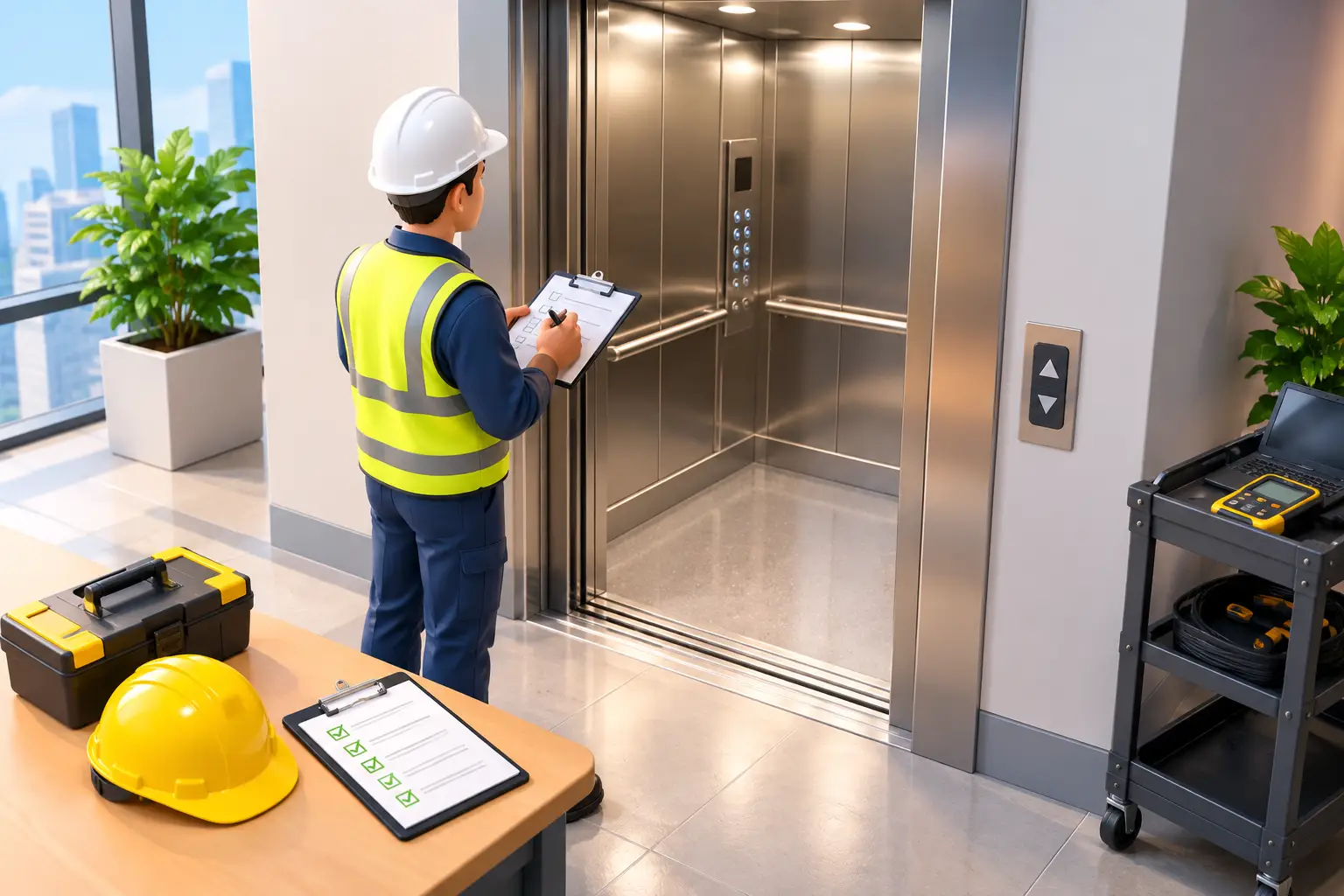
A lift can look complete long before it is ready to carry passengers. The finishes may be fitted, the car may travel between floors and the landing doors may close correctly, yet critical safety devices, communication systems or handover records can still be outstanding. A disciplined lift commissioning checklist gives property stakeholders a clear basis for accepting the installation and opening the lift with confidence.
For building owners, developers and facility managers, commissioning is not simply the final task on a construction programme. It is the point at which installation quality, safety performance, building interfaces and future maintainability are tested together. A rushed handover can create avoidable call-outs, occupant complaints, operational delays and safety exposure from the first weeks of service.
What lift commissioning should achieve
Commissioning verifies that the installed lift performs as designed, is safe to operate and can be supported effectively after handover. It should be completed by competent lift professionals, with the building representative given sufficient time to review results, ask questions and confirm that any defects have been closed.
The precise scope depends on the lift type, building use and project specification. A passenger lift in a hotel, for example, will have different traffic expectations from a goods lift in an industrial facility. A hospital, retail centre or high-rise office building may also have additional requirements for emergency operation, access control, fire interfaces or priority service.
The checklist should therefore be tied to the approved drawings, manufacturer instructions, applicable standards and the building's operational needs. It is not a replacement for statutory inspections or certifications required by the relevant authority. Rather, it provides a structured record that the installation has been checked before it becomes part of daily building life.
Lift commissioning checklist: pre-start checks
Before dynamic testing begins, the installation must be complete, clean and safe for technicians to work on. Commissioning a lift while other trades are still using the shaft for storage, finishing work or material movement often causes damage and makes meaningful testing difficult.
Confirm that the lift well, pit, machine room or control-space arrangement is dry, accessible, adequately lit and free of construction debris. Safe access routes, ventilation, guarding and working clearances must be in place. The pit should be checked for water ingress, loose materials and the correct condition of buffers, ladders, stop switches and lighting.
At this stage, verify that the electrical supply is correctly labelled and isolated where necessary, with the specified voltage, earthing and protective devices in place. The controller should be mounted securely and protected from dust, moisture and unauthorised access. Any battery-backed rescue system, emergency lighting or GSM communication unit must have its power source and backup function checked, not merely installed.
The car, entrances and landing surrounds also require close inspection. Look for damage to door panels, sill tracks, architraves, flooring, handrails, mirrors, displays and ceiling finishes. Minor defects are easier to resolve before tenants, guests or visitors begin using the lift.
Test safety systems before normal operation
Safety devices deserve the most rigorous attention because they protect passengers, technicians and anyone working near the lift system. Tests must follow the equipment manufacturer's procedures and be recorded by qualified personnel.
The commissioning team should verify the operation of door locks and interlocks at every landing. A lift must not travel with an entrance unlocked, and a landing door must not open unless the car is correctly positioned. Door protection devices, reopening behaviour, nudging functions and closing forces should be tested across the full travel path. Misaligned doors may seem like a minor finish issue, but they are a common source of nuisance faults, trapped-passenger incidents and premature component wear.
Other key tests include the governor and safety gear arrangements where applicable, terminal stopping devices, final limits, buffers, overspeed protection and unintended-car-movement protection. Emergency stop switches, inspection controls, alarms and car-top safety arrangements must operate correctly and be clearly identified.
Fire and emergency interfaces need particular care. Confirm the required recall sequence, designated landing, door behaviour and any fire-service operation against the approved building strategy. The correct response varies by site, so this must not be assumed from a standard setting. Where emergency power or generator supply is provided, test the lift's behaviour during a mains failure and restoration, including any programmed priority sequence for multiple lifts.
Verify ride quality and operating performance
A lift that meets basic safety conditions can still deliver a poor user experience if its movement, levelling or door operation is not properly adjusted. This is where commissioning protects both the building's reputation and the long-term condition of the equipment.
Run the lift through the full travel range in normal operation, inspection mode and, where required, under rated load. Check acceleration, deceleration, stopping accuracy, floor levelling, travel time, vibration and noise. The car should stop level with the landing within the specified tolerance and should not drift, bounce or hesitate at floors.
Observe door opening and closing at each landing. Door timing should support the building's traffic pattern without creating unnecessary delays or aggressive movement. In a busy shopping centre or hotel, passenger flow may justify different settings from a low-traffic residential building. However, faster operation must never compromise safe detection of people or objects in the doorway.
Check call registration, indicators, direction arrows, position displays, audible signals and any destination-control, card-access or intercom functions. Test each floor button and landing call point, including the highest and lowest floors. If the building has multiple lifts operating as a group, confirm that dispatching, parking floors and peak-traffic settings work as intended.
Load testing and practical operating scenarios
Load testing confirms that the lift can perform within its rated capacity and responds correctly to overload conditions. It should be carried out with appropriate test weights and safe handling procedures. The car should not accept travel when overloaded, and the overload indication should be clear to passengers.
Practical scenarios are equally valuable. Test a power interruption, alarm activation, emergency telephone call, automatic rescue operation and return to service. Confirm who receives the emergency call, whether the location is correctly identified and whether the communication remains available when normal power is lost. A working alarm is of limited value if it reaches an unmanned number or gives no useful information about the affected lift.
Confirm documentation, training and spares
A reliable handover includes more than a signed test sheet. The property team needs the information required to manage the asset, arrange maintenance and respond appropriately when an incident occurs.
The handover pack should include approved drawings, equipment data, controller settings, wiring diagrams, test records, certificates, operating instructions, maintenance recommendations and warranty details. Record the lift's serial numbers, rated load, speed, stops, drive details and any installed communication equipment. Clear labelling makes future fault diagnosis faster, particularly when a building has several similar units.
The building representative should receive a practical orientation covering normal operation, emergency procedures, isolation points, restricted areas and the process for reporting faults. Security, reception and facilities personnel need to know what to do if passengers are trapped: keep communication calm, prevent unsafe attempts to open doors and contact the approved lift response team promptly.
Discuss recommended preventative maintenance before handover, rather than after the first breakdown. Usage levels, environmental conditions, age of the equipment and the building's operating hours all influence the right service frequency. A lift in a dusty industrial environment or a high-traffic mall will usually need a different maintenance approach from one in a small residential development.
It is also sensible to agree which critical consumables and spare parts should be available. Door rollers, locks, belts, contactors and electronic components can have varying lead times. Holding the right items, or having access to a responsive supplier, can reduce downtime when faults occur.
Manage defects before final acceptance
Few projects reach handover without a snag list. The issue is not whether defects are found, but whether they are recorded clearly, assigned to the responsible party and closed with evidence. Do not allow cosmetic snags, recurring door faults or incomplete documentation to disappear into informal conversations at the end of a project.
Categorise findings by safety risk and operational impact. Any item affecting passenger safety, emergency communication or compliance should be resolved before the lift enters service. Lower-risk finishing items may be managed within an agreed rectification period, provided they do not expose users or compromise operation.
A final joint inspection with the installer, contractor and property representative provides a useful control point. It confirms that the lift delivered is the lift specified, and that responsibility for maintenance, emergency call-outs and warranty support is understood from day one.
For Botswana property teams, choosing a service partner that can support installation, commissioning, preventative maintenance and emergency response reduces the risk of gaps after practical completion. Brand Matrix approaches each handover with the same principle applied to ongoing service: every job matters, because every safe journey depends on the details being right.
A properly commissioned lift should not demand attention on its first day of public use. Give the handover the time, testing and documentation it deserves, and the building begins its service life with a safer, more dependable people-moving system.