A lift choice made during design can shape a building’s operating costs, passenger experience and maintenance demands for decades. When comparing hydraulic vs traction lifts, the right answer depends less on a single headline price and more on the building’s height, traffic pattern, available space and long-term service plan.
For a low-rise property with limited travel, a hydraulic lift may be a practical and cost-conscious solution. For taller or busier buildings, traction technology usually delivers better speed, energy performance and ride quality. Both can provide safe, dependable service when they are correctly specified, installed and maintained.
Hydraulic vs traction lifts: the core difference
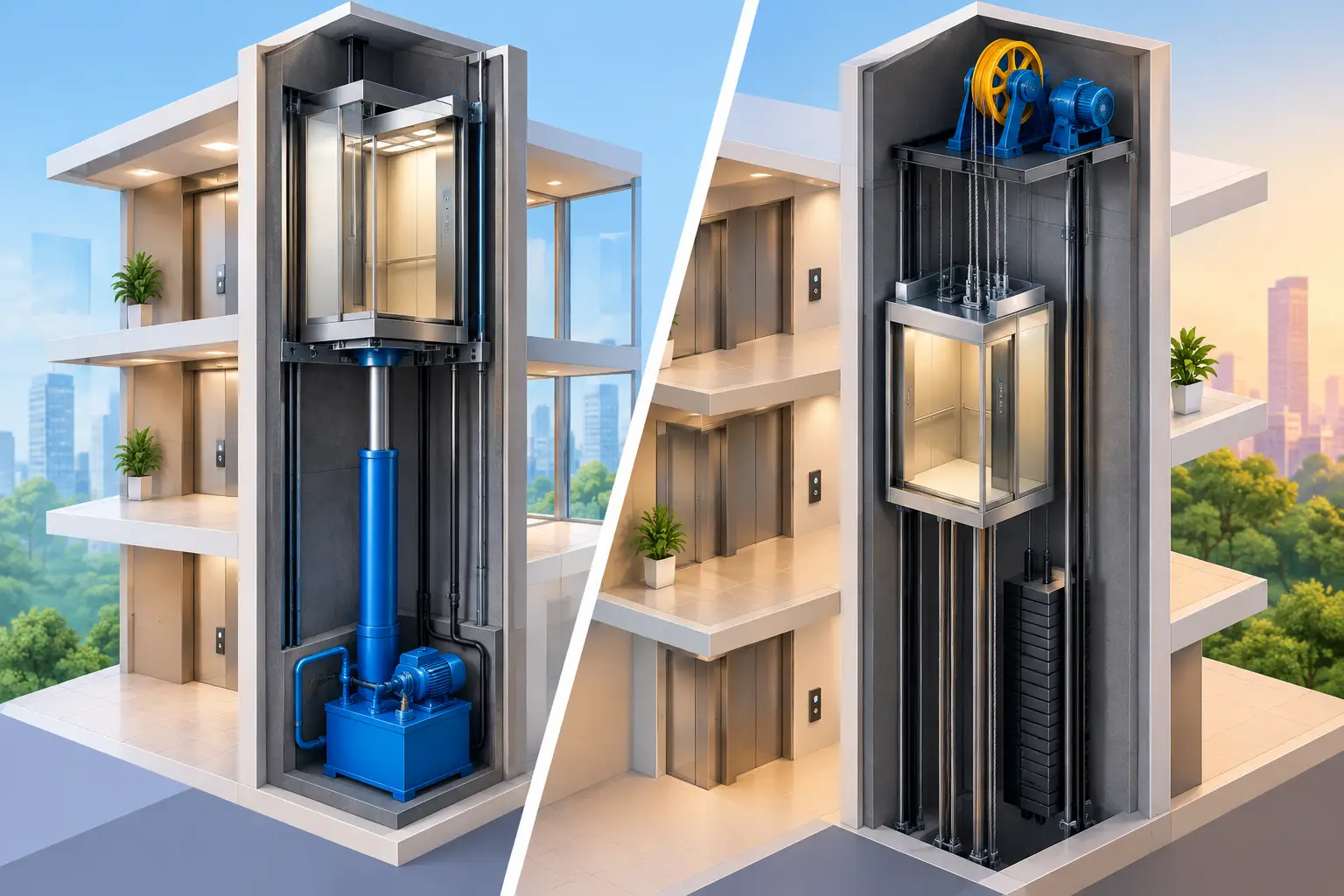
A hydraulic lift is raised by a piston or ram powered by hydraulic fluid. An electric motor pumps the fluid from a reservoir into a cylinder, pushing the lift car upwards. The car descends as fluid returns to the reservoir. This arrangement has been widely used in low-rise buildings because the equipment is relatively straightforward and can accommodate substantial loads.
A traction lift moves using steel ropes or belts that pass over a drive sheave. The sheave is turned by an electric motor, with a counterweight balancing much of the car’s weight. Modern traction systems may be geared or gearless, and many machine-room-less designs position key equipment within the lift shaft rather than in a separate motor room.
The mechanical difference affects almost every practical consideration, from building layout and travel speed to electricity use and the scope of future modernisation.
Building height and travel distance
Height is usually the first filter. Hydraulic lifts are generally suited to low-rise applications, commonly up to two or three floors, although the appropriate limit depends on the system design and local project requirements. They are often considered for small office blocks, clinics, low-rise residential developments, schools, warehouses and service lifts.
Traction lifts are designed for greater travel heights and faster operation. They are the usual choice for multi-storey offices, hotels, blocks of flats, shopping centres and high-rise developments. Where passengers need to move efficiently across several levels, traction technology is normally the more appropriate investment.
Speed matters even in a building that is not especially tall. A slow lift can create queues at check-in, during peak office hours or when a retail centre is busy. If a property expects high passenger demand, assess traffic flow early rather than choosing solely by the number of floors.
Load requirements can change the decision
Hydraulic systems are often well suited to heavy-duty, lower-speed duties. A goods lift serving a storeroom, industrial area or back-of-house hotel operation may benefit from their lifting characteristics. However, capacity alone should not determine the selection. Door size, car dimensions, loading method, duty cycle and the movement of trolleys or equipment all need to be considered.
A traction lift can also carry significant loads, particularly where a building requires frequent service across several floors. The design team should specify the lift around the actual operational use, not an assumed average passenger journey.
Space and structural planning
Hydraulic lifts traditionally require space for a pump unit and fluid reservoir, often located in a separate machine room near the lift shaft. Depending on the design, they may also require provisions beneath the shaft for the hydraulic cylinder. This can affect excavation, waterproofing and structural work, particularly where ground conditions or basements add complexity.
Traction lifts need overhead space above the top landing and, in conventional arrangements, a machine room. Machine-room-less traction lifts can reduce the need for a separate motor room, which may free valuable floor area. They still require careful shaft dimensions, overhead clearance, ventilation and access for safe maintenance.
For existing buildings, the best solution may be constrained by the structure already in place. A site survey should examine the shaft, pit, headroom, electrical supply, access routes and fire-safety interfaces before equipment is selected. Changes made late in the project can be expensive and may delay handover.
Energy use and operating costs
Hydraulic systems use the most power while travelling upwards because the motor must lift the full car load. The descent is typically assisted by gravity, but the energy used on the upward journey is not recovered. In a building with frequent use, this can result in higher electricity consumption than a modern traction system.
Traction lifts benefit from the counterweight, which offsets much of the load moved by the motor. Gearless traction systems are particularly efficient and can be a strong option for buildings with regular passenger traffic. Some configurations can also return energy to the building’s electrical system during certain operating conditions, subject to the equipment design and site electrical arrangements.
Energy performance should be assessed over the expected life of the asset. A lower initial installation cost can be outweighed by higher electricity, repair or replacement costs over many years. Developers and owners should compare whole-life cost, not only the first quotation.
Ride quality, noise and passenger experience
Traction lifts generally offer smoother, faster travel, especially over longer distances. They are a strong fit for hotels, premium residential buildings and commercial properties where passenger comfort is closely linked to the perception of the building.
Hydraulic lifts may travel more slowly and can produce audible noise from the pump unit during ascent. With sound planning and good-quality components, this can be managed, but it deserves attention where the machine area is close to offices, guest rooms or residences.
Ride quality is not determined by drive type alone. Correct installation, car balancing, guide-rail alignment, door adjustment and routine servicing all influence how a lift feels to passengers. A poorly maintained premium system will not deliver a premium experience.
Maintenance and reliability considerations
Both lift types require planned preventative maintenance, inspections and testing by competent technicians. Safety devices, doors, levelling accuracy, electrical controls, communication systems and emergency functions must be checked at appropriate intervals.
Hydraulic lifts need particular attention to fluid condition, seals, hoses, valves and cylinder performance. Leaks must be identified and addressed promptly to protect both system reliability and the surrounding environment. In older installations, cylinder condition and corrosion risk should be assessed carefully as part of a modernisation plan.
Traction lifts require inspection of ropes or belts, sheaves, brakes, traction performance and drive controls. The counterweight system, governor and shaft equipment also need regular examination. As systems age, controllers and door operators are often key candidates for modernisation because they influence reliability, fault diagnosis and parts availability.
The most reliable lift is not simply the newest one. It is the one supported by appropriate maintenance, genuine or compatible quality parts, accurate fault diagnosis and a responsive service partner when an unexpected breakdown occurs.
Choosing for your property type
For a small, low-rise building with limited traffic and a need to move heavier loads, a hydraulic lift may offer a sensible balance of functionality and capital cost. It can be particularly appropriate where journey times are not critical and the building design accommodates the necessary equipment space.
For a hotel, office tower, busy residential development or shopping centre, traction lifts are usually the stronger long-term option. They support greater travel heights, quicker service and lower energy use in high-duty applications. Machine-room-less traction designs can also be valuable where developers need to preserve lettable or operational floor space.
There are exceptions. A low-rise luxury development may choose traction for quiet, refined passenger travel, while an industrial facility may select hydraulic equipment for a specialised lifting duty. The decision should follow a proper site assessment and traffic analysis rather than a rule of thumb.
Specify for lifecycle value, not just installation day
Before approving a lift design, ask how the system will be maintained, which replacement parts will be available locally, how emergency calls will be handled and whether the controller can be modernised in future. Also consider power quality, backup communication, access for technicians and the effect of downtime on tenants, visitors or operations.
A clear maintenance contract helps protect the original investment. Planned lubrication, adjustments, safety checks and condition reporting can identify developing issues before they become disruptive failures. For property teams, this means more predictable budgets and fewer avoidable call-outs.
Brand Matrix approaches lift selection and support as a full-lifecycle responsibility: safe installation, practical maintenance planning, responsive repairs and timely modernisation when equipment no longer meets the building’s needs.
The best choice is the lift that matches how your people and goods actually move through the property, then receives the professional care needed to keep every journey safe and dependable.