A lift that arrives when called can still present a safety risk. Door faults, inaccurate levelling, worn brake components and unreliable emergency communication may not be obvious to passengers, yet each can affect the safe operation of the system. A planned lift safety inspection gives building owners and facility teams a clear view of these risks before they become a breakdown, a complaint or a serious incident.
For commercial buildings, hotels, malls, residential developments and industrial sites, inspections are not simply a maintenance formality. They are a practical safeguard for people, equipment availability and the reputation of the property.
What a lift safety inspection is designed to do
An elevator safety inspection is a structured assessment of the lift’s condition, operation and safety devices. It considers whether the equipment is working as intended, whether critical components show signs of wear, and whether corrective work is needed to maintain safe service.
The scope depends on the lift type, age, usage level and maintenance history. A busy shopping centre lift, for example, experiences a very different daily load from a lift in a low-rise residential block. Goods lifts and industrial installations may also require closer attention to door damage, loading practices and environmental conditions such as dust, heat or moisture.
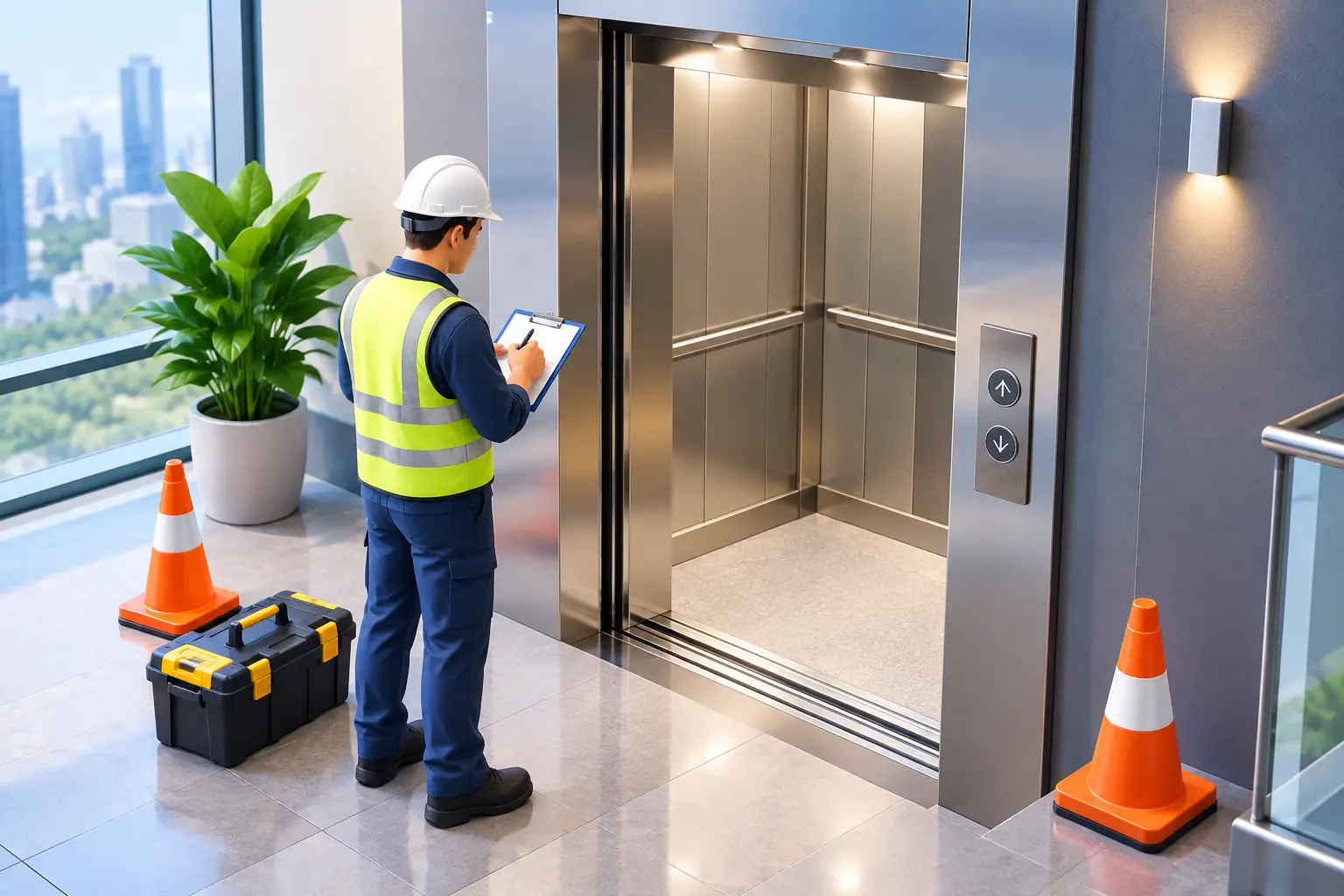
A thorough inspection should not rely on a quick ride between floors. It should include examination of the car, landing doors, machine room or controller area, shaft equipment and emergency systems. The aim is to identify defects while they are manageable, rather than waiting for a passenger entrapment or unexpected shutdown.
The areas that require careful checking
Every inspection should be led by competent technicians using appropriate procedures and test equipment. While the exact checks vary by installation, several areas are central to safe lift operation.
Doors and landing protection
Lift doors are among the most frequently used and most heavily stressed parts of the installation. Technicians assess door opening and closing behaviour, safety edges or light curtains, locks, rollers, guides and clearances. A door that repeatedly reopens, closes with excessive force or fails to lock correctly can interrupt service and create a direct passenger risk.
Landing doors also need close attention. Damage from trolleys, poor alignment or worn locking mechanisms can prevent the lift from operating or, more seriously, compromise protection at the landing.
Levelling, travel and ride quality
A lift should stop accurately at floor level so passengers can enter and leave without a trip hazard. During an inspection, technicians check levelling accuracy, starting and stopping performance, unusual vibration, noise and the consistency of travel between floors.
Poor levelling is sometimes caused by an adjustment issue. In other cases, it points to wear in the drive system, encoder, ropes, brake arrangement or controller. The right response depends on diagnosis. Repeated adjustments without addressing the underlying cause can lead to further downtime.
Brakes, suspension and drive equipment
The braking system, suspension means and drive equipment perform critical safety functions. Inspections may identify worn components, contamination, incorrect settings, overheating or signs of deterioration that require attention.
For traction lifts, technicians review components associated with ropes or belts, sheaves and tension. Hydraulic systems require focused checks of the pump unit, fluid condition, pipework and cylinders. These systems differ, but the principle is the same: safety-critical parts must be examined methodically and maintained to the manufacturer’s requirements.
Control systems and electrical condition
The controller is the operating centre of the lift. Inspectors check for fault records, loose connections, damaged wiring, signs of heat, battery condition and the performance of protective devices. Modern control systems can provide useful diagnostic information, but fault codes still need experienced interpretation. A recurring code may indicate a simple intermittent issue or the early warning of a more significant component failure.
Older installations deserve particular care. Obsolete relays, unavailable components and ageing wiring can make repairs slower and more costly. In these cases, a modernisation assessment may be more responsible than repeated short-term repairs.
Emergency communication and passenger release
When a passenger is trapped, reliable communication matters immediately. The alarm, intercom or GSM emergency unit should be tested as part of the inspection process, alongside any emergency lighting and rescue-related functions.
Property managers should also confirm that emergency call details are current and that staff understand the escalation procedure. Building personnel should not attempt to force doors open or release passengers without trained technical support. A calm response, clear communication and rapid attendance reduce risk during an incident.
Inspection, servicing and statutory requirements are not the same thing
These terms are often used interchangeably, but they serve different purposes. Routine servicing involves planned maintenance tasks such as cleaning, lubrication, adjustment, testing and replacement of worn items. It is essential for dependable day-to-day performance.
An inspection is more focused on condition, safety and compliance. It may identify defects that need repair, document areas requiring monitoring and support decisions about replacement or modernisation. Depending on the applicable local requirements, the installation may also need formal examinations or certification by authorised parties.
Property owners in Botswana should confirm the requirements that apply to their building, equipment and occupancy. There is no sensible one-size-fits-all interval. Usage, equipment age, environment, manufacturer guidance and any regulatory obligations should shape the inspection programme. What should remain consistent is the quality of the inspection and the speed with which serious findings are addressed.
Warning signs that should not wait for the next visit
A planned schedule is the foundation of safe operation, but certain symptoms warrant immediate attention. These include repeated trapping incidents, doors striking or failing to close, uneven floor levelling, burning smells, abnormal noises, water ingress, unreliable emergency calls and frequent controller faults.
Frequent call-backs are also a warning sign, even when each fault seems minor. A lift that is repeatedly reset without a clear root-cause investigation may continue to fail at the worst possible time. For a hotel, that can affect guest confidence. For a hospital, retail site or office tower, it can disrupt access, deliveries and daily operations.
Documenting complaints from tenants, reception teams and security staff helps technicians see patterns that may not be visible during a single maintenance visit. The most useful information includes the time of the fault, floor location, error message if displayed, sounds observed and whether the lift was carrying passengers or goods.
Turning inspection findings into practical action
An inspection report should be understandable to both technical and non-technical stakeholders. It should distinguish between urgent safety work, repairs needed to prevent further deterioration, and longer-term improvements that can be planned within a capital budget.
Priority matters. A safety-critical defect requires immediate control of the risk, which may mean taking the lift out of service until repairs are complete. Other findings may allow controlled operation while parts are ordered or work is scheduled outside peak periods. The correct decision depends on the nature of the defect, not simply on convenience.
For larger properties, it is helpful to maintain an asset record for each lift. This should capture service history, inspection findings, call-backs, replaced parts, recurring faults and major upgrades. Over time, this record supports better budgeting and makes it easier to decide when modernisation offers better value than continued reactive repair.
Choosing the right inspection partner
A capable service partner should be able to inspect, diagnose, repair and advise across the full lifecycle of the equipment. This avoids the common gap where a defect is identified but no clear solution, parts plan or response timeframe follows.
Ask how findings are prioritised, how emergency call-outs are handled and whether technicians can support older as well as newer systems. Quality replacement parts, clear reporting and access to responsive technical support are just as important as the inspection itself. Brand Matrix approaches each request with this safety-first focus, whether the work involves a routine check, a complex fault or a modernisation plan.
A safe lift is the result of consistent attention, not luck. When inspections are planned, findings are acted on promptly and service history informs decisions, property teams can protect passengers while keeping a vital building system available when it is needed.