
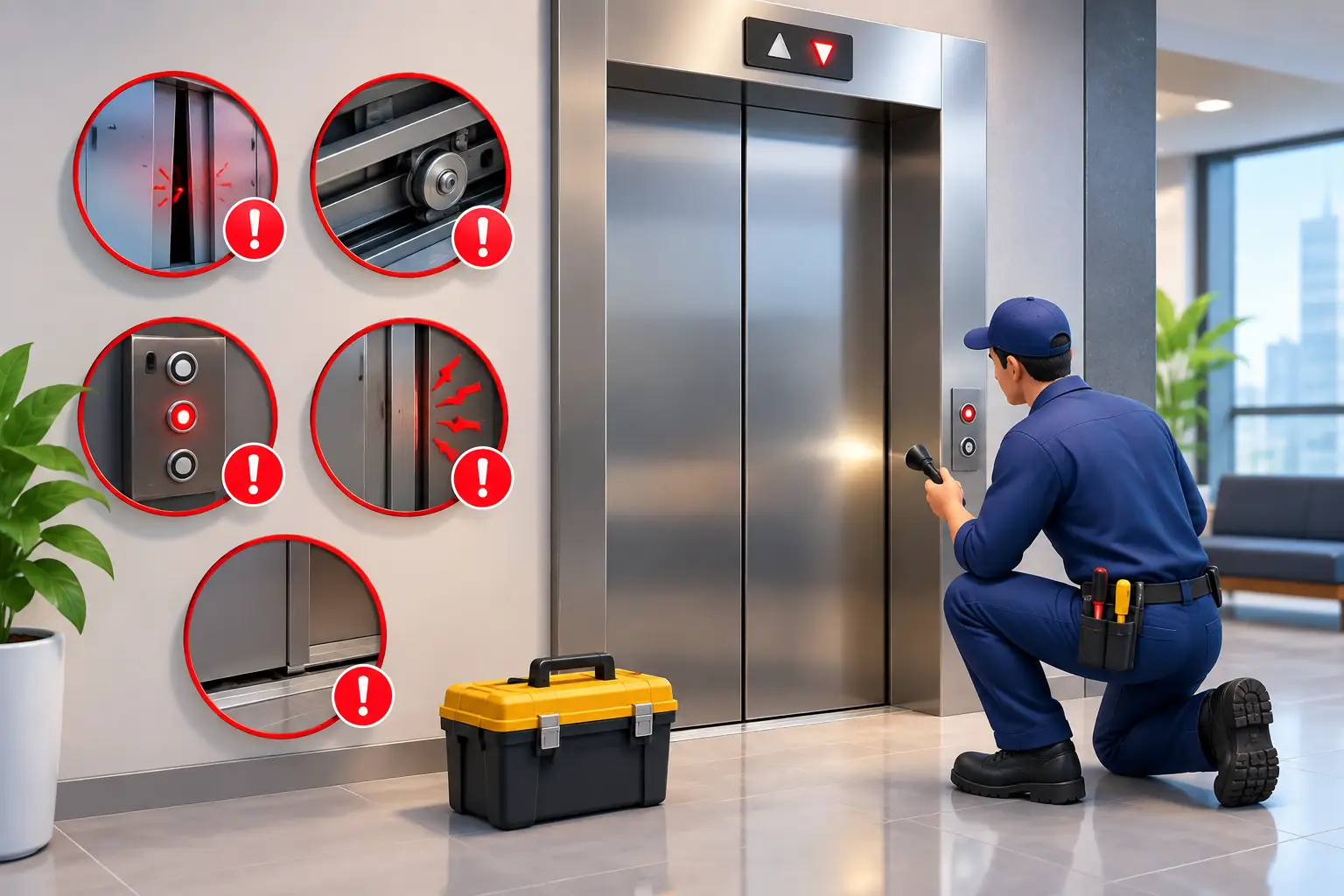
A lift can be running normally one moment and become a major operational problem the next when its doors begin to hesitate, strike, reopen repeatedly or fail to close. For a busy hotel, shopping centre, office block or residential development, lift door repair is not a minor cosmetic task. It is a safety-critical service that affects passenger confidence, accessibility, tenant satisfaction and the availability of the entire lift.
The doors are among the hardest-working parts of any lift system. They open and close hundreds or thousands of times each day, depending on building traffic. Because they combine moving mechanical parts, electrical controls and safety devices, small faults can quickly lead to nuisance shutdowns or unsafe operation if they are ignored.
Why lift door repair deserves prompt attention
Lift doors are designed to protect passengers from the lift shaft and to ensure the lift only travels when the entrance is safely closed and locked. A fault in the door operator, landing doors, locks, rollers or safety edge can therefore stop the lift from moving altogether. In many cases, the issue is doing exactly what the safety system intends: preventing operation until it can confirm that the doors are secure.
For property managers, the practical impact is immediate. A single out-of-service lift may create long waiting times, affect access for people with reduced mobility, disrupt deliveries and place extra pressure on other lifts in the building. Where a building has only one lift, the consequences are more serious still.
Prompt professional attention can also prevent a manageable adjustment from becoming a more expensive repair. A worn roller, contaminated track or poorly aligned door panel may initially cause an occasional delay. Continued use can strain the door operator, damage related components and result in an unplanned shutdown at the worst possible time.
Common signs that a lift door needs repair
Not every issue means the lift must be taken out of service immediately, but unusual door behaviour should always be reported and assessed by a competent lift technician. Building teams should pay attention to changes in how the doors sound, move and respond to passengers.
Doors that reopen or fail to close
Repeated reopening is one of the most common complaints. It may be caused by an obstructed door track, misaligned panels, worn rollers, a faulty safety sensor or problems with the door operator settings. Dust, litter and small objects can interfere with smooth movement, particularly in high-traffic entrances.
Passengers may assume someone has pressed the door-open button, but repeated reopening without a clear obstruction should not be dismissed. The system may be detecting resistance or failing to confirm that the doors have properly closed.
Slow, noisy or jerky movement
Doors should travel steadily and close with controlled movement. Scraping, rattling, banging, squealing or visible jerking can point to worn mechanical parts, insufficient lubrication, loose fixings or alignment problems. Noise is not always an emergency, but it is useful early evidence that a component needs inspection.
A technician can determine whether adjustment is sufficient or whether parts such as rollers, guides, belts, couplings or door operator components require replacement. The correct approach depends on the lift model, the age of the equipment and the condition of associated components.
Gaps, misalignment and physical damage
Door panels that sit unevenly, leave unusual gaps or appear to rub against one another require attention. Damage from trolleys, luggage, building materials or heavy foot traffic can affect the appearance and operation of both car and landing doors. Even slight misalignment can prevent locks from engaging correctly.
For commercial and hospitality properties, damaged doors also affect the presentation of the building. However, appearance should not be separated from function. A dented panel may conceal damage to guides, tracks or locking equipment behind it.
A lift that stops with doors closed or partly open
If passengers report that a lift stops and the doors remain closed, partially open or slow to respond, the cause may involve the door system, control system or position sensing. This needs proper diagnosis rather than guesswork. Staff should follow the building's established procedure for reporting the issue and arrange professional support.
No one should attempt to force doors open, hold them apart with an object or interfere with landing door locks. These actions can worsen the defect and create a serious safety risk.
What happens during professional lift door repair
Effective repair begins with diagnosis. A qualified technician will inspect the fault history where available, observe the door cycle and test relevant safety circuits. They may assess the door operator, drive belts or chains, rollers, door tracks, landing door locks, electrical contacts, sensors and mechanical clearances.
The goal is not merely to make the doors move again. The repair must restore safe, repeatable operation. That may involve cleaning and lubricating approved components, adjusting door timing and alignment, tightening fittings, replacing worn parts or correcting an electrical fault. After work is completed, the doors should be tested through repeated cycles to confirm that they close, reopen and lock correctly.
The parts required will vary. Older systems can present a particular challenge when original components are no longer readily available. In these cases, an experienced service provider can advise whether a compatible replacement, targeted refurbishment or a planned modernisation offers the best long-term value.
When repair becomes a modernisation decision
A single door fault does not automatically mean the whole system needs upgrading. Yet repeated call-outs for door problems can indicate that the equipment is approaching the point where reactive repairs are no longer cost-effective.
This is especially relevant where a lift has obsolete control equipment, recurring door operator failures or components with extended lead times. A modern door operator or wider lift modernisation may improve reliability, ride quality and fault diagnostics. It can also reduce the uncertainty of sourcing ageing parts during an emergency breakdown.
The right decision depends on usage, equipment age, maintenance history, availability of parts and the building's operational priorities. A low-use residential lift may be well served by a focused repair and planned maintenance. A heavily used retail, hotel or commercial lift may justify investment in more durable, modernised door equipment to reduce disruption over time.
Reducing door faults through preventative maintenance
Most lift door issues do not appear without warning. Preventative maintenance gives technicians the opportunity to identify wear before it affects service. During scheduled visits, attention should be given to door movement, roller condition, track cleanliness, panel alignment, locks, safety devices and the performance of the door operator.
A dependable maintenance plan should reflect how the building uses its lifts. A mall, hospital-adjacent facility, hotel or office tower with high passenger volumes will have different demands from a small residential block. Usage patterns, environmental dust, loading practices and the number of floors all influence wear.
Property teams can also help by encouraging occupants and contractors to use lifts responsibly. Avoiding overloaded trolleys, preventing materials from striking door panels and reporting unusual sounds early can reduce avoidable damage. Housekeeping around entrances matters too, as debris in sill tracks is a common and preventable cause of poor door movement.
What building managers should do when a fault is reported
When a lift door problem is reported, record the location, time, symptoms and whether passengers were inside the car. Details such as a repeated reopening at one floor, a scraping noise, a door that only fails during peak periods or an intermittent fault can help technicians diagnose the issue faster.
If the lift appears unsafe, is trapping passengers, has damaged doors or will not close securely, keep people clear of the equipment and request urgent technical assistance. Do not rely on repeated reset attempts as a solution. A fault that disappears temporarily may return under load or at a different landing.
For planned support and urgent breakdown response, Brand Matrix approaches every request with the same safety-first focus: identify the root cause, carry out quality repairs and help restore dependable service with minimal disruption. Clear communication between the building team and technician makes that process faster and more effective.
A lift door that hesitates today may be signalling a fault that affects tomorrow's access, safety and tenant experience. Treating early warning signs seriously protects passengers, safeguards the equipment and gives your building the best chance of uninterrupted operation.