
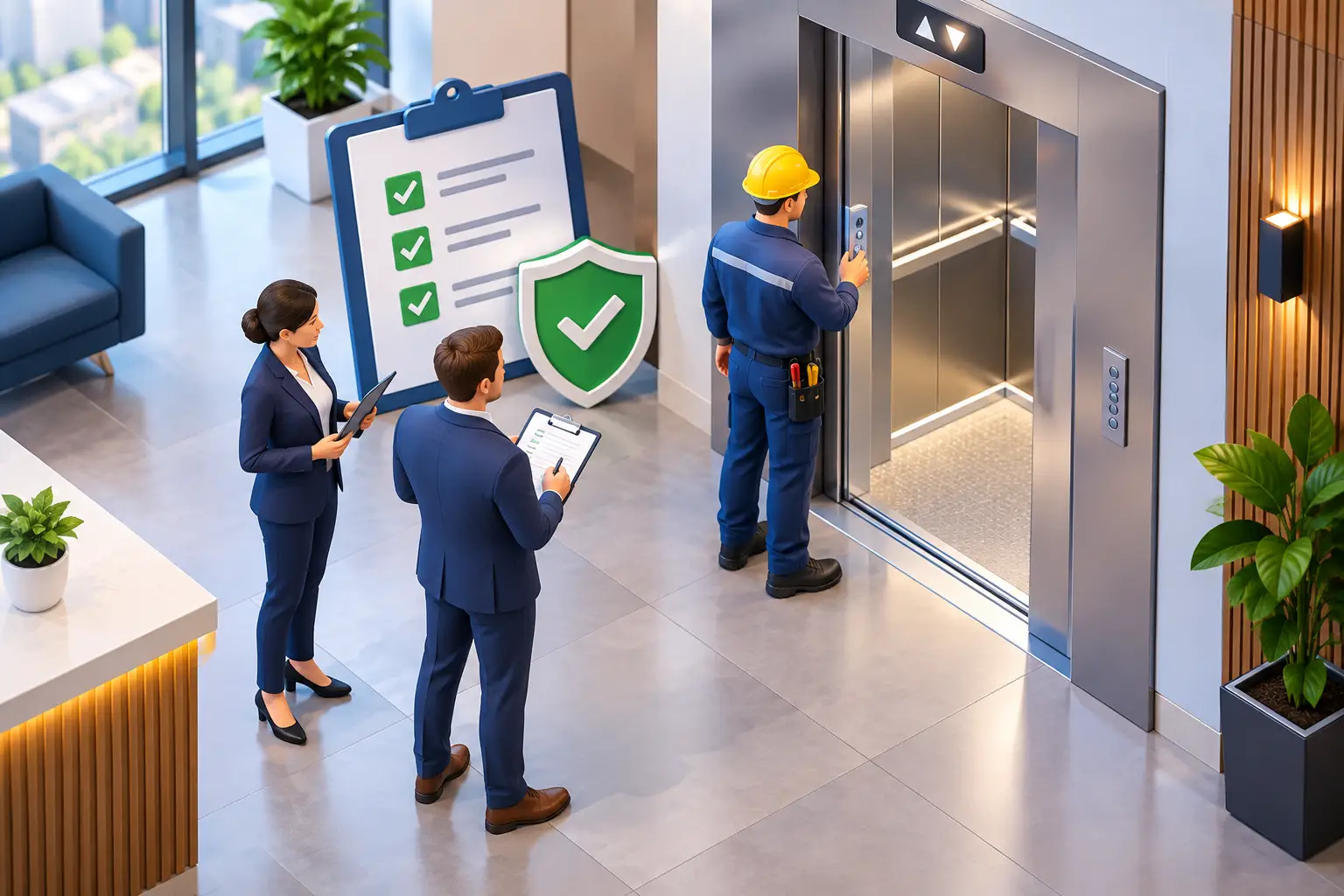
A lift can appear to be working normally right up to the point when a door fault, levelling error or failed safety device puts passengers at risk. That is why a commercial lift compliance guide must be more than a file kept for an annual inspection. For property teams in Botswana, compliance is the day-to-day discipline of keeping equipment safe, documented, professionally maintained and ready for use.
For a hotel, shopping centre, office block or industrial site, lifts are critical infrastructure. When they are unavailable, tenants are inconvenienced, visitors lose confidence and accessibility can be compromised. When they are unsafe, the consequences are far more serious. A planned approach protects people first, while also reducing avoidable downtime, emergency call-outs and premature equipment replacement.
What commercial lift compliance means in practice
Lift compliance means meeting the applicable legal, safety and inspection requirements for the building and its equipment, while following the manufacturer’s maintenance instructions and recognised technical standards. Exact obligations can vary according to the lift type, its age, its use and the requirements of the relevant local authorities or insurers. Building owners should therefore confirm the requirements that apply to their specific site rather than relying on a generic checklist.
In practical terms, compliance depends on three things working together: a safe installation, competent maintenance and clear evidence that the system has been inspected and managed properly. A lift that is serviced but has incomplete records can create difficulties during an audit or incident review. Equally, a complete logbook cannot compensate for worn door rollers, unreliable levelling or a safety circuit that has not been tested correctly.
The duty cannot be handed over entirely to a maintenance provider. A specialist contractor performs the technical work, but the property owner or facilities team remains responsible for ensuring the contract scope is suitable, defects are addressed and documentation is retained.
Start with a clear equipment register
Many compliance gaps begin with a simple problem: the building team does not have an accurate record of what is installed. Create an equipment register for every lift, goods lift, platform lift and escalator on site. Include the unit location, manufacturer, model, serial number, installation date, rated load, passenger capacity and controller details.
The register should also identify equipment that serves a particular operational purpose. A lift used for public access in a mall faces different demand from a service lift in a warehouse. A hotel passenger lift may need close attention to ride quality and availability, while a hospital or high-rise residential building may have additional operational dependencies. Understanding how each unit is used helps set the right maintenance frequency and response priorities.
Keep the register current after any major repair, controller replacement, door upgrade, modernisation or change in building use. It becomes the foundation for budgeting, risk assessment and future replacement planning.
Inspections must go beyond a quick visual check
Routine checks by building staff are useful, but they are not a substitute for planned technical inspections. A trained lift technician should inspect, test, adjust and record the condition of critical components at intervals appropriate to the equipment and its operating environment.
This work typically includes the landing and car doors, door locks, levelling accuracy, alarm system, emergency lighting, safety gear, overspeed protection, ropes or belts, travelling cables, buffers, limit switches and controller functions. The technician should also assess the machine space or control area for cleanliness, ventilation, water ingress, unauthorised access and signs of overheating.
High-traffic sites often need more frequent attention because doors, buttons and mechanical components experience greater wear. Dusty industrial environments, coastal conditions, unstable power supply and older equipment can also justify an enhanced maintenance plan. Less frequent service may look economical on paper, but it can be a false saving when it leads to recurring faults or an unexpected shutdown.
Daily and weekly checks for site teams
Facilities staff do not need to dismantle lift equipment to contribute to safety. They should report unusual noise, door hesitation, poor levelling, damaged finishes, flickering displays, trapped-passenger alarms and repeated callbacks. They should also keep lift entrances clear, prevent water from entering shafts or pits, and ensure access to control areas remains restricted.
If a lift stops between floors or behaves unpredictably, do not attempt to release passengers without appropriate training and procedures. Keep people informed, contact the maintenance provider and use the agreed emergency response process. Improvised rescues can create additional danger for passengers and staff.
Keep records that stand up to scrutiny
Good records turn maintenance from a verbal assurance into evidence. Keep service reports, inspection certificates, defect notices, repair quotations, testing results, emergency call-out reports and records of completed corrective work in one controlled location. Digital records are often easier to retrieve, but only if responsibility for filing and review is clear.
Each service report should state what was inspected, what work was carried out, any parts fitted, defects found and recommendations made. Vague notes such as “checked and serviced” provide little value when a property manager needs to understand risk, approve expenditure or demonstrate due care after an incident.
Review outstanding defects promptly. Separate them by urgency: faults affecting safety or reliable operation require immediate action or withdrawal from service, while lower-risk cosmetic items can be planned. The key is not to allow recommendations to disappear into a maintenance file without an owner, a deadline and a decision.
Manage contractor competence and maintenance scope
A compliant lift depends on the competence of the people maintaining it. Select a provider with trained technicians, appropriate diagnostic capability, access to quality replacement parts and a clear escalation path for urgent faults. The cheapest contract is not always the lowest-cost option if it excludes essential inspections, offers limited call-out cover or relies on unsuitable components.
Ask what the planned maintenance visit includes and how often each lift will be attended. Clarify response times for trapped passengers, complete breakdowns and non-urgent faults. It is also sensible to establish how the contractor will communicate recurring issues, obsolete parts risks and recommendations for modernisation.
At Brand Matrix, planned servicing is approached as preventative work rather than a reaction to breakdowns. That means using inspections and diagnostics to identify deterioration early, helping property teams make informed decisions before a minor issue becomes a prolonged outage.
Do not overlook emergency communication and rescue planning
A trapped passenger incident tests both the lift system and the building’s wider emergency arrangements. Every commercial site should have a documented process for receiving alarms, contacting the service provider, communicating with passengers and securing the area until assistance arrives.
Test emergency communication equipment regularly. GSM-based systems can improve the reliability of alarm calls where traditional arrangements are inadequate, but the device must be configured, powered and checked as part of the maintenance regime. A phone number that has changed, a flat backup battery or weak signal can undermine an otherwise well-maintained installation.
Security teams, reception staff and duty managers should know who to call and what information to provide: the lift location, number of people affected, any medical concern and whether the lift is serving a critical area. They should never force doors or enter the shaft unless authorised and trained to do so.
Plan modernisation before reliability becomes a crisis
Older lifts can remain safe and useful when properly maintained, but age changes the risk profile. Components become obsolete, electrical systems may no longer offer reliable diagnostics, and repeated repairs can begin to cost more than targeted modernisation. Compliance is not automatically achieved by replacing everything, nor is it preserved by repairing indefinitely.
A condition assessment helps determine the sensible route. Door equipment, controllers, drives, landing fixtures, car interiors and communication systems can often be upgraded in stages. This can improve safety, availability, energy performance and passenger experience without the disruption of a full replacement. The right option depends on component condition, building traffic, parts availability, budget and the expected life of the property asset.
A commercial lift compliance guide that people will use
The best compliance process is simple enough to be followed when the building is busy. Assign a named person to review service reports, track open defects and maintain the equipment register. Schedule periodic meetings with the maintenance provider to discuss fault trends, response performance and upcoming work. Where several lifts are installed, compare callbacks and downtime across units to spot patterns early.
Compliance should not be treated as a once-a-year event or a problem reserved for major breakdowns. It is a practical operating standard that protects passengers, supports tenant confidence and gives property teams control over a critical asset. A well-kept lift is rarely the result of one big intervention. It is the result of small, timely decisions made consistently.