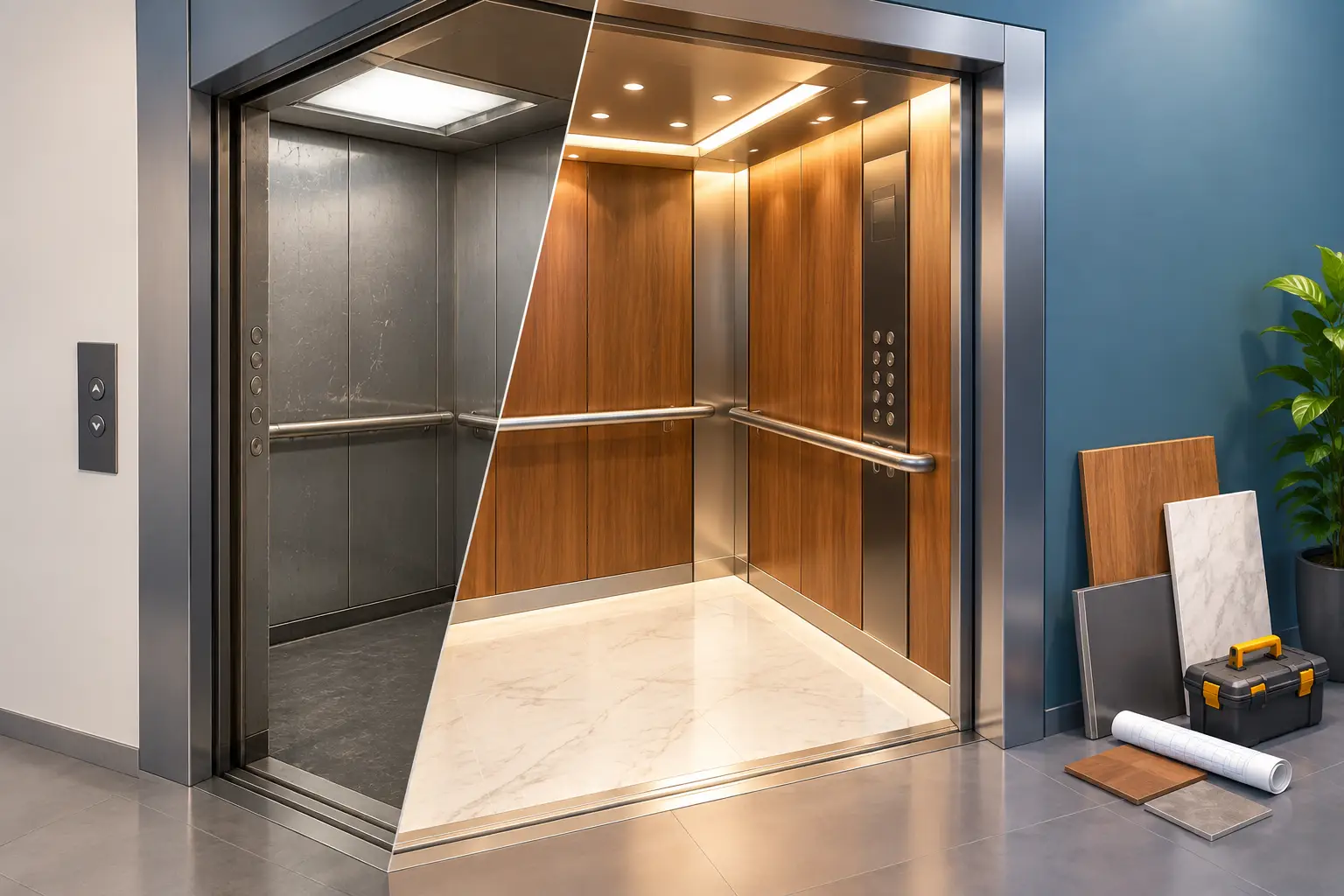
A worn lift cabin is noticed long before passengers understand why it feels neglected. Scratched wall panels, damaged flooring, poor lighting and outdated operating panels can affect confidence in the entire building. Lift interior refurbishment gives property owners a practical way to improve that daily experience while protecting a valuable asset - provided the work is properly planned and never treated as a purely cosmetic exercise.
For hotels, office blocks, shopping centres, residential developments and public-facing facilities across Botswana, the lift interior is part of the building’s service standard. It is one of the few spaces every visitor, tenant, employee or guest may use. A clean, well-finished cabin communicates care; a tired or damaged one can suggest wider maintenance concerns, even where the lift is mechanically sound.
What lift interior refurbishment should achieve
A successful refurbishment does more than make a cabin look newer. It should create a durable, safe and maintainable environment that suits the building’s use. The right scope depends on passenger traffic, the age and manufacturer of the lift, the condition of its existing finishes and the operational demands of the property.
In a busy mall, for example, the priority may be impact-resistant panels and flooring that can withstand trolleys, heavy footfall and frequent cleaning. A hotel may place greater value on refined finishes, warm lighting and a cabin design that complements its guest areas. In an industrial facility, robust materials, clear signage and practical lighting may matter more than decorative detail.
The best projects balance appearance with life-cycle value. An inexpensive decorative surface may initially look attractive but prove difficult to repair or keep clean. Premium materials are not automatically the right answer either. They must be suitable for the cabin environment, compatible with the lift equipment and realistic for the maintenance budget.
Start with a condition and safety assessment
Before selecting colours, finishes or fittings, assess the cabin and its operating components. This is essential because interior work can affect lift weight, clearances, electrical connections, accessibility and fire performance. A lift that has unreliable doors, worn travelling cables or recurring faults needs those technical matters addressed separately; new panels will not resolve an underlying reliability issue.
A professional assessment should examine the cabin walls, ceiling, floor, handrails, mirrors, lighting, car operating panel, indicators, emergency communication equipment and door finishes. It should also establish whether there is corrosion, water damage, loose fittings or damage caused by vandalism. These details influence both the refurbishment method and the materials that can safely be installed.
Weight is particularly important. Adding stone-look cladding, thick flooring, heavy mirrors or solid timber features can alter the car’s balance. Depending on the lift configuration, this may require adjustments to counterweighting or other components. Ignoring this point can affect ride quality, levelling and long-term equipment performance.
A site survey also helps to plan the work around occupants. Property managers need a clear view of access arrangements, estimated downtime, protection of surrounding finishes and whether one lift can remain in service while another is refurbished. In a single-lift residential block, a phased approach may not be possible, so communication and efficient scheduling become even more important.
Choosing finishes for the way the building is used
Cabin finishes should be selected for performance first, then appearance. Stainless steel remains a practical choice for high-traffic environments because it is durable, easy to clean and available in finishes that reduce the visibility of fingerprints and minor scratches. Laminated or high-pressure decorative panels can provide greater design flexibility, but their edges, fixings and resistance to cleaning products must be considered carefully.
Flooring deserves particular attention. It must provide secure footing, cope with regular cleaning and remain stable under wheelchairs, luggage, trolleys and everyday passenger use. It should also be installed without creating trip points or interfering with door sill clearances. A floor finish that looks impressive in a sample can become a maintenance problem if it marks easily or loses grip when wet.
Lighting is often the fastest way to improve the feel of a cabin, but it should not be selected on appearance alone. Well-positioned LED lighting can improve visibility, reduce energy use and make the interior feel more welcoming. The light level should allow passengers to read buttons, notices and safety information clearly without glare or harsh reflections from polished surfaces.
Modernising the car operating panel can also improve usability. Clear button labelling, legible floor indicators, tactile features and appropriate mounting heights support accessible travel for a wider range of passengers. Where an older panel is retained, it should still be checked for secure mounting, readable markings and reliable operation.
Refurbishment is not the same as modernisation
The terms are often used together, but they are not identical. Lift interior refurbishment focuses mainly on the passenger environment: cabin finishes, lighting, flooring, fixtures and visual presentation. Modernisation can involve the technical systems that control lift operation, such as controllers, door operators, drive systems, safety devices and communication equipment.
The two may be combined when the lift is ageing or when recurring breakdowns are affecting service. Doing both at once can reduce repeated shutdowns and ensure the interior work is compatible with new equipment. However, a full modernisation is not always necessary. If diagnostic checks show that the lift’s critical systems are in good condition, a focused interior upgrade may offer the best value.
The decision should be based on evidence, not assumptions. Maintenance records, fault history, inspection findings and parts availability all help determine whether a cosmetic project is sufficient or whether a larger modernisation plan should be considered.
Managing disruption without compromising quality
A reliable contractor will set out the work sequence before materials arrive on site. This includes isolating the lift safely, protecting entrances and lobby finishes, removing old components carefully, checking the cabin structure, installing new finishes and carrying out functional tests before returning the lift to service.
Rushing this process creates avoidable risks. Loose wall panels, poorly finished edges, unsuitable adhesives or incorrectly reconnected lighting can result in call-backs, passenger complaints and additional downtime. Quality control matters as much as the design concept.
For occupied buildings, communication is part of the service. Tenants, guests and staff should know when the lift will be unavailable, which alternative routes are available and who to contact if assistance is needed. In hospitality settings, this may require work outside peak guest movement periods. In commercial buildings, evening or weekend work may be the least disruptive option. The right approach depends on the site, not a standard timetable.
Protecting the investment after handover
A refurbished cabin remains in good condition longer when cleaning and maintenance routines are matched to the materials installed. Harsh chemicals, abrasive pads and unsuitable polishes can quickly damage panel coatings, flooring and stainless-steel finishes. Building teams should receive straightforward guidance on approved cleaning methods and on reporting loose fittings, water ingress or impact damage early.
Routine lift servicing provides an opportunity to inspect interior components as well as technical equipment. Handrails, mirrors, lights, button panels and floor edges should be checked for damage or movement before a minor issue becomes a safety concern. High-use locations may also benefit from planned touch-up work rather than waiting until the whole cabin appears worn again.
At Brand Matrix, interior enhancement is approached as part of the lift’s wider operating environment. The aim is not simply a better-looking cabin, but a safer, durable and professionally finished space that supports reliable daily service.
A lift cabin should reflect the standard of the property it serves. With the right assessment, practical material choices and disciplined installation, refurbishment can give passengers confidence every time the doors open.